
Final Fantasy VII Soundtrack – Listen Free 24/7
A closer look at Aerith's Theme, One-Winged Angel, and the music that gives Midgar its emotional identity.
Why Final Fantasy VII Music Still Matters
Ask many Final Fantasy fans to name the soundtrack that defined the series, and Final Fantasy VII is often one of the first answers. From "Aerith's Theme" to "One-Winged Angel," its music helped shape how an entire generation remembers Midgar, Sephiroth, Cloud, and the journey beyond the city walls.
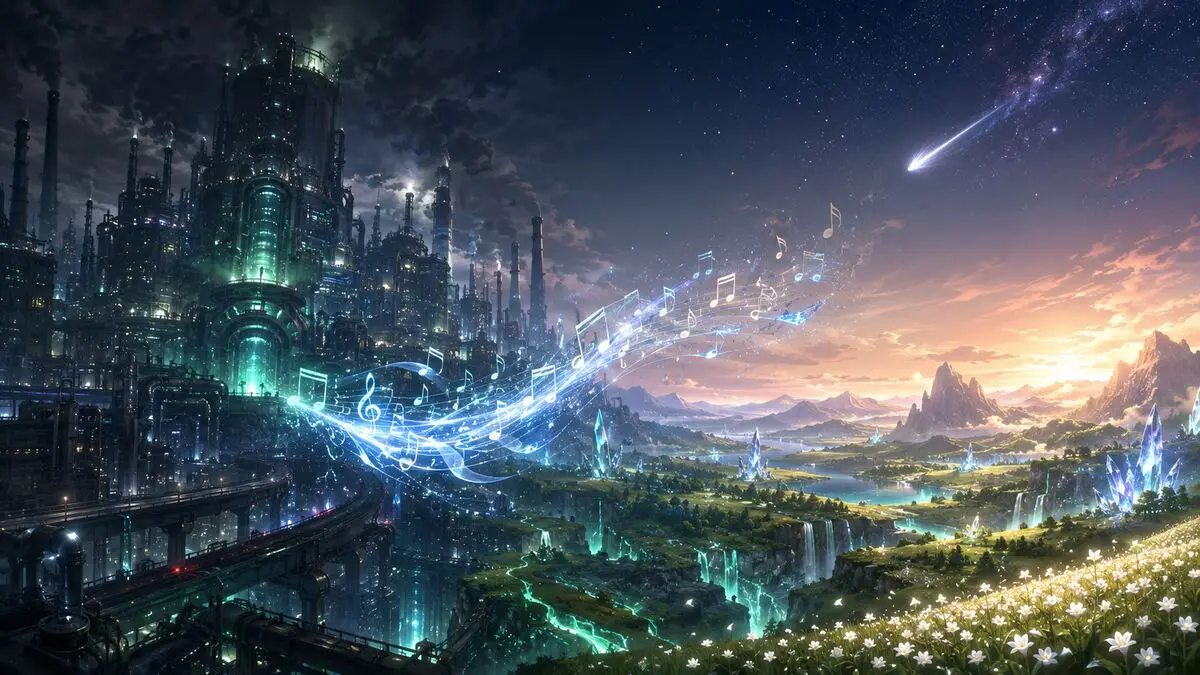
What makes the soundtrack so powerful is not only nostalgia. It is the way the music gives every place and character a distinct emotional identity — industrial sounds for Midgar, fragile melodies for Aerith, cosmic tension for Sephiroth, and quieter themes for memory, loss, and hope.
This guide explores the music of Final Fantasy VII, from the 1997 original to Remake and Rebirth, and shows why its soundtrack remains one of the most important musical worlds in the series.
The 1997 Original
For many players, Final Fantasy VII was the game that introduced them to Japanese RPGs, cinematic storytelling, and the emotional power of Final Fantasy music. It was also the first Final Fantasy on CD-ROM, which meant Nobuo Uematsu could use real instrument samples instead of synthesizer chips.
The result was a richer, more cinematic sound. The soundtrack blends industrial electronic textures for Midgar's oppressive cityscape with intimate acoustic pieces for the quieter, more personal moments outside it. This contrast became one of the defining features of the score.
If You're New to Final Fantasy VII Music
Not sure where to start? These tracks capture the emotional range of Final Fantasy VII, from Midgar's industrial tension to the personal themes that stay with players for years.
- Aerith's Theme — A gentle, fragile melody that becomes deeply connected to the story as it unfolds.
- One-Winged Angel — The dramatic final boss theme, combining choir, orchestra, and a dark energy that is hard to forget.
- Main Theme of Final Fantasy VII — The emotional travel theme that opens up the world outside Midgar and gives the journey its sense of scale.
- Opening – Bombing Mission — The track that immediately establishes the tension and industrial identity of Midgar.
- Cosmo Canyon — A warmer, more spiritual theme that gives the soundtrack one of its most memorable emotional contrasts.
- JENOVA — A strange, pulsing battle track that adds science-fiction tension to a soundtrack already full of variety.
Each of these tracks reveals a different side of the soundtrack, and listening to them in order gives a sense of the game's emotional arc.
Essential Final Fantasy VII Tracks
Here is a closer look at some of the most important pieces in the Final Fantasy VII soundtrack.
Aerith's Theme — A gentle theme associated with memory, innocence, and one of the most emotionally charged moments in the series. Built around harp arpeggios and strings, it is simple enough to hum and powerful enough to stay with you.
One-Winged Angel — A dramatic final boss theme that mixes choir, orchestra, and rock energy. For many fans, it became the sound of Sephiroth and one of the most recognizable boss themes in gaming.
Main Theme of Final Fantasy VII — The travel theme that plays on the world map. It carries a sense of scale, distance, and quiet determination that gives the journey outside Midgar its emotional weight.
Opening – Bombing Mission — The first major track players hear. It combines urgency, industrial rhythm, and cinematic scope, immediately telling you what kind of world Midgar is.
Cosmo Canyon — One of the warmest and most spiritual tracks in the soundtrack. It offers a direct emotional contrast to the metallic coldness of Midgar and reminds players of the world beyond the city.
JENOVA — A pulsing, alien battle theme that adds science-fiction tension to a soundtrack otherwise grounded in orchestral and industrial sounds. It signals that not all threats in the game are human.
Aerith's Theme — Music as Emotional Storytelling
Perhaps no piece of video game music has resonated with as many players as "Aerith's Theme." Written for the flower girl of the Sector 5 slums, the piece uses harp arpeggios and gentle strings to create an atmosphere of innocence, fragility, and quiet resilience.
The power of the composition is in its simplicity. A repeating melodic motif builds tension without resolving into triumph. That tension mirrors Aerith's place in the story: a character who carries hope while being constantly in danger.
When the pivotal moment arrives, the music stops. The silence becomes part of the scene. Then, as the player processes what has happened, a choral arrangement of the theme returns, turning personal grief into something shared.
One-Winged Angel — The Sound of Sephiroth
"One-Winged Angel" stood out when it was first heard. A choral piece supported by orchestra and rock elements, it brought a sense of drama to the final boss battle that felt unlike much of what had come before it.
The title refers to Sephiroth's appearance in the final encounter, and the music matches that imagery: dark, determined, and much larger in scale than a typical battle theme. For many fans, the track became inseparable from the character. Hearing it remains one of the most memorable moments of the game.
It has been performed in concert settings around the world, and for a generation of players, it is still the sound of Sephiroth.
Midgar — Industrial Soundscapes and Memory
Much of the soundtrack's identity comes from its setting. Midgar is an industrial city powered by Mako energy, controlled by the Shinra corporation, and divided between the plate above and the slums below. The music reflects that division.
Tracks like "Opening – Bombing Mission," "Mako Reactor," and "Shinra Company" use electronic beats, synthesized bass, and mechanical percussion to create a sense of oppressive technology. There is a coldness to the sound that matches the city's hierarchy and its disregard for the people living beneath the plate.
Once Cloud leaves Midgar and the story opens into the wider world, the music shifts. Strings, woodwinds, and acoustic textures replace the electronic pulse. That contrast is deliberate. The soundtrack tells the story of industrialization versus nature without needing a single line of dialogue.
Remake and Rebirth
Years later, the music returned in a new form. Final Fantasy VII Remake and Rebirth reimagined many of Uematsu's original themes with modern orchestration, expanded arrangements, and a more dynamic approach to combat and exploration music.
Tracks like "Aerith's Theme – The Lifestream" combine Uematsu's original piano work with strings and vocals. Battle themes shift dynamically as encounters progress. For longtime fans, the new arrangements offer a fresh way to hear music they already love. For new players, the soundtrack does exactly what the original did: attach a melody to a moment.
The Remake and Rebirth projects did not simply replace the original. They added a second layer of interpretation on top of music that was already deeply embedded in fan memory.
Why FFVII Music Still Resonates
Final Fantasy VII music works because it attaches melodies to memories. Aerith, Sephiroth, Midgar, the world map, and the Lifestream all have musical identities. Years later, fans do not only remember scenes — they remember how those scenes sounded.
The soundtrack also continues to attract new listeners. Through Remake and Rebirth, concerts, and playlists, younger players are encountering these themes for the first time alongside those who played the original on the PlayStation in 1997.
That combination of nostalgia and discovery is rare. It is one of the reasons the music of Final Fantasy VII remains so present in conversations about video game soundtracks decades after its first release.
Listen to Final Fantasy VII on Materia FM
The best way to understand Final Fantasy VII music is to hear it. Materia FM brings together the original soundtrack, Remake, Rebirth, and related arrangements into a dedicated listening experience for fans.
- Final Fantasy VII playlist — tracks from every era, ready to explore
- Live radio stream — a mix of Final Fantasy VII music alongside the rest of the series
- Who Is Nobuo Uematsu? — learn about the composer behind the original soundtrack
- Best Final Fantasy Soundtracks — discover more celebrated scores from the series
- The Evolution of Final Fantasy Music — follow how the music has changed across generations
Whether you are revisiting old tracks or hearing them for the first time, the music of Midgar is always there.
Frequently Asked Questions — Final Fantasy VII Soundtrack – Listen Free 24/7
Who composed Final Fantasy VII music?
Nobuo Uematsu composed the original 1997 Final Fantasy VII soundtrack. The Remake and Rebirth projects reimagined many of his original themes with modern arrangements and contributions from several composers and arrangers.
Why is One-Winged Angel so famous?
"One-Winged Angel" is famous because it brought choir, orchestral drama, and rock energy into a final boss theme in a way that felt unforgettable for many players. It became closely associated with Sephiroth and remains one of the most recognizable tracks in Final Fantasy music.
Why is Aerith's Theme so emotional?
Aerith's Theme is emotional because it is simple, gentle, and strongly tied to her role in the story. As the game progresses, the melody becomes associated not only with Aerith herself, but also with memory, loss, and hope.